
HPAP vs HomeAdvantage DC in 2026

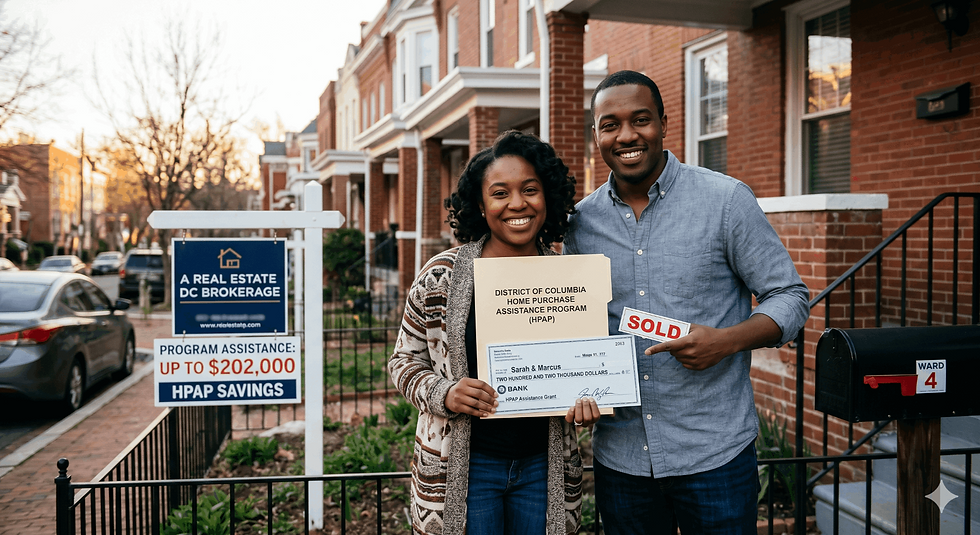
If saving enough cash to buy a home in Washington DC feels like the hardest part of becoming a homeowner, you are not alone. Two programs that first-time buyers may hear about in 2026 are HPAP and the newer HomeAdvantage DC.
Both can make homeownership more accessible, but they work very differently.
HPAP is designed primarily to provide substantial gap financing for eligible low- to moderate-income first-time buyers. HomeAdvantage DC, which became effective May 1, 2026, combines a 30-year first mortgage with optional down payment assistance.
So which program is better?
The short answer: HPAP may be more valuable if you qualify and need significant help with upfront costs. HomeAdvantage DC may be a better fit if you want a more straightforward mortgage program with up to 3% or 3.5% down payment assistance and can meet its lending requirements.
HPAP vs HomeAdvantage DC: Quick Comparison
Feature | HPAP | HomeAdvantage DC |
Main Purpose | Gap financing and closing cost assistance | First mortgage with optional down payment assistance |
Maximum Assistance | Up to $202,000 gap financing + up to $4,000 closing costs | Up to 3% conventional or 3.5% FHA/VA down payment assistance |
Interest on Assistance | 0% interest | Depends on program structure and current financing terms |
First-Time Buyer | Required | Generally required, with some targeted-area exceptions |
Minimum Credit Score | 630 under current HPAP guidance | 660 |
Property Location | Washington DC | Washington DC |
Primary Residence | Required | Required |
Loan Types | Used with an eligible first-trust mortgage | Conventional, FHA and VA |
Application Route | HPAP/CBO process | Participating DCHFA lender |
Best Fit | Buyers needing substantial upfront assistance | Buyers wanting mortgage financing with smaller DPA |
The biggest difference is easy to see: HPAP can potentially provide much more assistance, while HomeAdvantage DC offers a simpler mortgage-centered structure.
What Is HPAP?
The Home Purchase Assistance Program, or HPAP, is Washington DC's long-running assistance program for qualifying first-time homebuyers.
Eligible buyers can currently receive up to $202,000 in gap financing, plus up to $4,000 toward closing costs. The exact amount is not automatic. It depends on factors including household income, household size, financial need, assets and available program funding.
HPAP assistance is structured as an interest-free subordinate loan, rather than free cash.
For borrowers earning below 80% of Median Family Income, repayment is generally deferred until the home is sold, refinanced to take out equity or stops being the borrower's primary residence. Moderate-income borrowers between 80% and 110% MFI generally receive a five-year payment deferral followed by principal-only repayment.
That structure can make HPAP extremely valuable for a buyer who has enough income to support homeownership but simply cannot save a large DC down payment quickly.
What Is HomeAdvantage DC?
HomeAdvantage DC is a newer DCHFA homeownership program that took effect on May 1, 2026.
Instead of offering a very large gap-financing loan like HPAP, HomeAdvantage DC focuses on the first mortgage itself.
Qualified buyers currently have three main choices:
· A 30-year fixed mortgage without down payment assistance
· A conventional mortgage with up to 3% down payment assistance
· An FHA or VA mortgage with up to 3.5% down payment assistance
The program requires the property to be located in Washington DC and used as the borrower's primary residence. Its current minimum credit score is 660, and the standard maximum debt-to-income ratio is 50%, with additional requirements applying in some FHA situations.
For someone who does not need six figures of assistance but still wants help reducing the cash required upfront, this can be a much easier program to understand.
Example: Buying a $500,000 Home
The difference becomes clearer with an example.
Suppose you want to purchase a $500,000 home in Washington DC.
With a HomeAdvantage conventional loan offering 3% down payment assistance, the assistance could represent up to: $15,000
With an FHA or VA HomeAdvantage option offering up to 3.5%: $17,500
HPAP works differently. An eligible buyer could potentially receive substantially more because the assistance is based on the financial gap and the household's eligibility rather than simply a fixed percentage of the purchase price.
The maximum HPAP gap-financing amount is currently $202,000, with separate closing-cost assistance of up to $4,000. That does not mean every HPAP buyer receives $202,000.
This is why comparing only the headline numbers can be misleading.
When HPAP May Be the Better Choice
HPAP deserves serious consideration if your biggest obstacle is the amount of cash needed to buy.
It may be particularly useful if you:
· Are a qualifying first-time buyer
· Fall within HPAP's income requirements
· Have limited savings for a down payment
· Need more assistance than 3% or 3.5%
· Plan to use the property as your long-term primary residence
· Are willing to complete the additional application and counseling process
For the right household, the difference between $15,000 of assistance and a much larger gap-financing package could determine whether buying in DC is realistic at all.
The trade-off is that HPAP comes with more moving parts.
Funding is limited, assistance is handled on a first-come, first-served basis, and buyers need to coordinate the program with their primary mortgage and purchase timeline. Buyers should confirm current availability before depending on HPAP for a purchase.
When HomeAdvantage DC May Be the Better Choice
HomeAdvantage DC may make more sense when you can already qualify for the mortgage and need a smaller amount of help getting through the upfront costs.
It may fit buyers who:
· Have reasonable savings but want to preserve some cash
· Can meet the 660 minimum credit-score requirement
· Want conventional, FHA or VA financing
· Prefer to work primarily through a participating lender
· Need 3% to 3.5% assistance rather than a large gap-financing package
· Meet the program's household-income and purchase-price limits
DCHFA currently lists purchase-price limits of up to $1,306,974 in non-targeted areas and $1,597,413 in targeted areas, although buyers still need to satisfy the program's other requirements.
For some buyers, simplicity has real value. The largest assistance program is not automatically the best program if another option fits your financing and timeline more comfortably.
Do Not Compare Assistance Without Comparing the Mortgage
This is one of the most important points for first-time buyers.
More down payment assistance does not automatically mean a less expensive home purchase.
You should compare:
· Interest rate
· Monthly principal and interest
· Property taxes
· Homeowners insurance
· Mortgage insurance, if applicable
· Cash required at closing
· Assistance repayment requirements
· Long-term plans for the property
HomeAdvantage DC rates can also differ depending on whether you choose down payment assistance. Because mortgage rates in 2026 and program pricing can change, buyers should use current lender figures rather than relying on an old online example.
The best program is the one that improves both your cash-to-close situation and your long-term affordability.
Which Program Should a First-Time Buyer Choose?
Think about the decision this way.
Choose HPAP First if:
Your biggest problem is coming up with enough cash to make buying possible, and you meet the program's income and first-time buyer requirements.
Explore HomeAdvantage DC First if:
You are closer to being mortgage-ready, need a smaller amount of down payment help and want to compare conventional, FHA or VA options through a participating lender.
Compare Both if:
You appear eligible for both programs.
Do not decide based only on the maximum assistance advertised online. Have your actual income, household size, credit, monthly debts, savings and target purchase price reviewed.
A program that looks better on paper may not produce the better mortgage for your specific situation.
A Smart First Step Before House Hunting
Before scrolling through listings every night, start with the financing and review a practical first-time buyer guide for the DMV so you understand the full purchase process before making an offer.
Start with three questions:
How much home can I comfortably afford each month?
How much cash can I realistically bring to closing without emptying my savings?
Which DC assistance program actually fits my household?
Once those numbers are clear, your home search becomes much more focused. You can also use the current Washington DC buyer market guide to understand where buyers may have more negotiating room in 2026.
You can compare neighborhoods and properties based on a real purchasing plan instead of falling in love with a house before knowing whether the financing works.
Final Answer: HPAP or HomeAdvantage DC?
There is no universal winner.
HPAP is likely the stronger option for an eligible buyer who needs significant down payment and closing-cost support. Its potential assistance is far larger than the percentage-based help available through HomeAdvantage DC.
HomeAdvantage DC may be the more practical option for a mortgage-ready buyer who needs moderate down payment assistance and wants a streamlined financing route through a participating lender.
In either case, qualification matters more than the headline benefit.
Before making an offer on a Washington DC home in 2026, compare the actual mortgage terms, total monthly payment, cash to close and repayment obligations—not just the assistance amount.
Ready to Explore Your First Home in Washington DC?
Buying your first home becomes easier when you know your financing options before the search begins.
RaquelRealTour helps first-time buyers understand the Washington DC market, compare neighborhoods, evaluate properties and coordinate the buying process around a realistic budget and financing plan.
FAQs
Is HPAP better than HomeAdvantage DC?
HPAP may be better for eligible buyers who need substantial upfront assistance because it can provide up to $202,000 in gap financing plus up to $4,000 toward closing costs. HomeAdvantage DC may be better for buyers who need more modest assistance and prefer a first-mortgage program offering up to 3% or 3.5% DPA.
What credit score do you need for HPAP and HomeAdvantage DC?
Current HPAP guidance lists a minimum credit score of 630, while HomeAdvantage DC currently requires at least 660. Your primary mortgage lender may apply additional underwriting standards.
How much does HomeAdvantage DC give for a down payment?
HomeAdvantage DC currently offers up to 3% down payment assistance with an eligible conventional mortgage and up to 3.5% with eligible FHA or VA financing.
How much can you get through HPAP in DC?
Eligible HPAP buyers can currently receive up to $202,000 in gap financing assistance plus up to $4,000 in separate closing-cost assistance. The actual award depends on income, household size, assets, need and available funding.
Are both programs only for homes in Washington DC?
Yes. Both programs require the eligible property to be located in the District of Columbia and used as the buyer's primary residence.


Comments